Episode
8
·
The Build Project
With
Nick Fiore
FLOWER architecture
·
Hosted by Alex Molkentin
·
·
1:15:15
Chapters
00:30 · What is FLOWER architecture
02:00 · Style as a fingerprint, not a goal
09:30 · The spec-project thought experiment
13:30 · What "a Fernhill" should mean
16:30 · The builder's spec book
24:30 · Windows, warranty, and who carries risk
28:30 · Rain screens in a dry climate
32:30 · Friend-hat advice for a first-time client
44:00 · Choosing a builder: beers and references
48:00 · Wabi-sabi, gray wood, and maintenance
54:30 · Pinterest patterns and honest feedback
68:00 · Rosebud thorn
In short
Architect Nick Fiore of FLOWER on style as a fingerprint, the builder's real influence, and why the client has to be the hero.
Takeaways
Style is a fingerprint, not a goal. It comes out of habits, constraints, and process, and chasing an identifiable aesthetic during design is a trap.
The architectural expression is the outside line of the section. What happens between those lines should be up for negotiation with the builder, because that's where the warranty lands.
A builder's spec book reads as a cut above, not a threat: asserted standards, approved vendors, and a substitution process, communicated before the design settles.
Tell clients to call references and ask how problems were handled, not whether they happened. Bumps are the law of the land; the response is the differentiator.
Life is maintenance. Gray wood, noisy fans, and a little wabi-sabi belong in the client conversation before construction starts, not after.
About this episode
Marty Brodsky introduced Nick Fiore on this show as the best architect in Boulder, so I had to get him in the room. Nick runs FLOWER architecture, named for what Fiore means in Italian, and describes his job about as plainly as an architect can: he wakes up to make good buildings, and to help people make buildings that work for them in ways they hadn't considered.
The first thing we dig into is style. Nick doesn't go into projects with a style in mind, and he doesn't chase an identifiable aesthetic. His argument is that authorship happens anyway, like a fingerprint: your habits, your ways of solving problems, and the constraints of budget, site, and code lead you to the solutions, and worrying about ego during design is a trap. The same is true for builders. Of the million questions in a project, the drawings answer a fraction, and the rest get answered by the GC and the crews. That imprint is where a builder's difference lives, whether or not anyone can name it.
The middle of this conversation is the most practical stretch this podcast has had on builder-architect mechanics. We talk about the spec book I've been developing, asserted standards, approved vendors, a substitution process, and Nick's take surprised me: he'd welcome it, because in residential the warranty falls on the builder, and following the builder's lead on assemblies is critical. His line of the episode: the architectural expression is the outside line of the section, and everything between those lines should be a negotiation. We also get into windows and the VE meeting that always comes for the biggest line items, rain screens and whether they earn their cost in Colorado's dry climate, and why award photography pretends gutters don't exist.
The back half is for anyone hiring us. Nick's friend-hat advice for prospective clients: build the three-legged team of owner, architect, and contractor first, have a beer with the builder before you sign anything, call the references and ask how problems were handled rather than whether they happened. And accept, before you start, that construction sites look like chaos, wood grays, fans make noise, and life is maintenance. The clients who internalize that end the project saying the eight best words in this business: do what you think is right.
We close with a rosebud thorn about kids growing up and a young firm growing up alongside them. If you're choosing an architect or a builder in Boulder, this is a long, honest look at how two of them think.
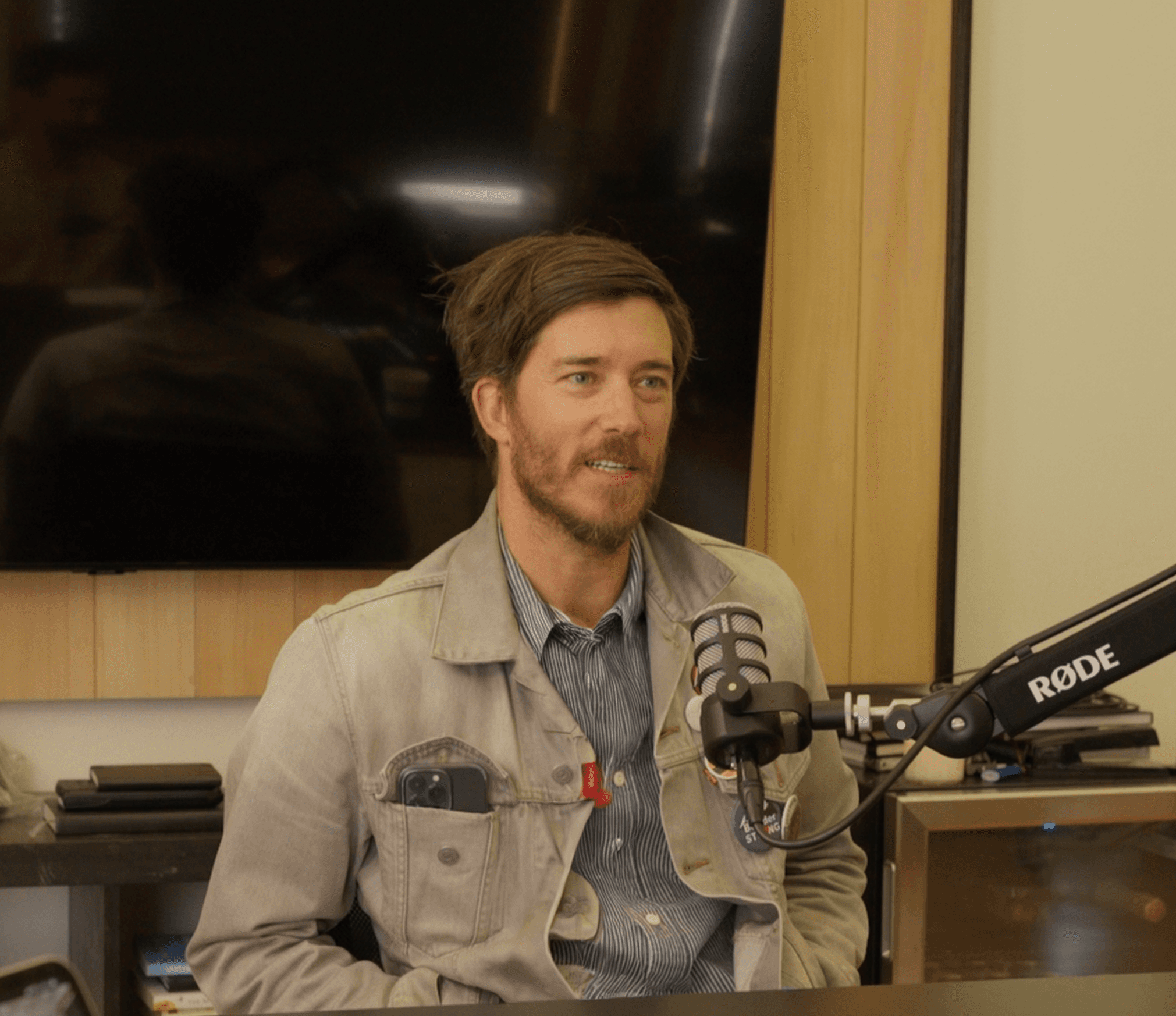
Nick Fiore
Nick Fiore grew up in Pennsylvania and landed in Boulder in 2006. Fiore means flower in Italian, which named the studio he founded when his son was born, working under one motto: make it useful, make it beautiful, make it last. FLOWER architecture.
FLOWER architecture
Transcript
ALEX
You were introduced by Marty last week as the best architect in Boulder.
NICK
Marty, uh, thank you, Marty. I don't want to say Marty's full of shit.
ALEX
I think you could say that.
NICK
No, he would laugh. But definitely not full of shit. On that one, I appreciate the thought.
ALEX
What is Flower architecture?
NICK
Oh, boy. Flower architecture is where I play around with buildings and think about buildings, and try and help people make the buildings that they need. Maybe the buildings that they dream about, hopefully. If we're talking a thousand feet up, I think that sums it up. I have a spiel on the website I wish I could remember and recite to you right now. But at the end of the day, what I wake up to do every day is to make good buildings. I want to help people make buildings that work for them, and also work for them in ways that they don't necessarily consider before we start working together. That's really it.
ALEX
Would you say that you have a style? I think you have a style.
NICK
There probably is one there. People that make things, in all media, architects included, there's going to be an authorship imprint, like a fingerprint that happens. Maybe it's human nature, maybe it's the way people's brains work. I think it comes out in ways that are subconscious. So I don't go into projects with a specific style in mind. Certainly I have a style in the sense that you have habits, ways of thinking, ways of solving problems, and that results in style. It's like a DNA or something.
When people ask me, I might say modern or something that's squishy and meaningless. It's modern because it happens today, in the current times, right? It certainly could be called that. But maybe there's a humanistic approach, where I want things to be places people want to be. Places people feel safe, feel private. So there's a warm palette of materials, maybe, or that kind of feeling. I do houses mostly, lately at least. And I also really take pride in trying to solve the problems of utility, and maybe embrace the constraints of budget, instead of running away or wishing. We all wish we had bigger budgets, probably. Looking that in the eye and saying: I don't. This is the budget, so what can we do with this?
ALEX
And you know this about me, I like those challenges. I think maybe it's just because it requires creative thinking on the builder side of things. But it's actually something I've struggled with a lot lately. You just described the service industry to a T. I used to think that my service was providing agency to the clients and an informed process. And as I've progressed in my journey, I've realized there are a lot of ways to make money, and part of this is also that I just want to build cool shit. So I struggle with: how much of this do I want to be a product? What do I want Fernhill to be? There's a certain answer for it on the builder side of things, and another answer potentially on the design side.
Because then there's that ego element. You want the design to be a manifestation of you in a way, or it's going to be, as much as it is the client's. Do you want Flower to be an identifiable aesthetic to a certain degree? I think of Olson Kundig, I could pick that out from a mile away. There are a bunch of them we both know. Do you want that?
NICK
Not consciously, no. I don't think it's a goal to be identifiable. And I think that's a little bit a result of accepting what I think I see from the work anyway, if that makes sense. I don't know that I can reproduce copies of other work when I'm asked sometimes. You say, can you do something like this? And it just never comes out that way. It goes through some kind of time machine and comes out with three arms because of the process of the time machine.
I think it goes back to that DNA or fingerprint concept. And especially for builders, this can happen too. The way you do things, or ask your subs to do things, or control that chaos that is construction, is going to imprint on the buildings that you make, whether you're doing them for architect A or architect B. Because of the Fernhill method and the way you run it. If there's a million questions, and the plans answer 300,000 of them, there's 700,000 questions, minor questions maybe, but cumulative, that fall to the GC or the subs. The little things the carpenter has to think about that day to start the work. Those will be imprinted by the GC more than the architect, that 70 percent. And that's where the Fernhill difference might come in. I think that imprints on the buildings in a way that people recognize when they're in them. You've got to eat the food to understand it, in a way.
And this is the way I think about doing what I do, too. If I do it the way I think is right, with some sort of goodness, the spiritual goodness or what have you, trying to do the right thing with the decisions you're making for your clients and with them, then the project will be good in some base way, and anything beyond that is sort of gravy. If it's also aesthetically pleasing to your architect peers, hey, that's great. But more often than not, you're not going to get that piece. If you know the goodness piece is there, you can always take the next step forward, and it'll probably result in more work and better word of mouth and good reputation, because you're doing layers of the right thing.
Because you can't control the other stuff. Other people are going to attribute different ideas and feelings to your business or your brand, what Flower is or what Fernhill is. You can't really control that. You can try. You can buy ads or pay for a fancy website, or do podcasts, or do TikToks.
ALEX
That's my method of controlling everyone: this podcast.
NICK
And not to knock podcasts. I love podcasts. To me it's almost like layers that create a rock.
ALEX
I have a thought experiment. I come to you with a spec project, and I'm just like, hey, I just want a Flower product. On the other hand, we have a client coming to you like, hey, I have a lot of ideas for what I want, but we want to use Flower. Is there one or the other that you would enjoy inherently more? Because in my mind, you could potentially just express you in the spec project, whereas the other one, you're delivering that service, which might be the process you like and find value in.
NICK
Right. Which would be ideal? I think it goes back to architecture studio education, in college, grad school. You have this sort of idealized client, a paragraph of constraints the professor might give you. Here's the design problem. But because there are no real people there, all the complexity of humanity is washed away. There are almost no rules, and it can almost be more difficult. There's nothing to hang your hat on, no constraints to push against or react to. There's usually a site, so there's context, there's always something. But what I like about practice, versus that academy pretend architecture, is the people thing. It gives you real feedback about what you're doing, and whether you're serving the client for what they expect and need from the project.
And the ego part, the expression part, I try not to think about that at all during design, because I think it's a trap. In a way, the aesthetic is going to come from your process and the constraints of realities. We might know there are certain materials we can and can't use. There might be a fire zone, and that leads to your exterior decisions, whether you have eaves, whether you use wood. All these different layers of reality lead you to solutions. That's the way I think about it.
In that case, spec builders: I have yet to meet a spec builder that comes to me with what I deem to be a decent marriage of what I'm looking to do in the morning when I wake up. I don't wake up in the morning and think, how can I make money on buildings? That's not my motivation. And I challenge spec builders, if I do speak with them, to see where their value system lies. Will you spend extra to do a good building, a more architecturally pleasing building? Not necessarily. What I'm really trying to guard against is the lowest denominator, the race-to-the-bottom kind of process. Because that's where you really end up with design and construction that has issues, and then warranty and other problems down the road.
ALEX
It does answer it. I was actually joking this morning: I mentioned that FS is on a site in Boulder, and there was a problem with one of the layouts and plumbing that was actually called out to the plumber, and they said it was good. And of course it's a problem. And I was like, man, if I just cared about money, there's no way in hell I'd be a builder. I'd be a plumber, number one.
NICK
There'd be better ways to make money quick.
ALEX
I'd be a plumber setting pipe with a laser, and I'd be cleaning up. But I do care about the product a lot, and that's hard, because you're going back to the ego element. Something I'm working on for the company: when I was working with a brand strategist, he was asking me what I want the end result of Fernhill to mean. And I said, I just want it to be that people maybe go to sell their house one day and they go, hey, this is a Fernhill. What does that mean? I said that to a potential client once and they asked, is that a style? Don't get me wrong, I definitely have styles I'm interested in. I love that New Zealand aesthetic, I'm biased towards it to begin with. But I want it to be a quality building that was built in a way that always advocated for the client, and never made compromises that cause long-term tangible differences. If we made compromises, it was by sacrificing the fifth bathroom, not by an inferior wall system. People just know that without ever being able to voice it. I want that.
But what that also means is you inherently have this other side of the puzzle, where the design team comes into play and you're trying to marry that with the client's desires. I think there are a million different ways to do it. I haven't found the perfect way yet. And it's more interesting when you think, hey, if the priority is the aesthetic over the service, or what the client values. A lot of times the client just struggles to articulate what they want, and that creates challenges in itself, because then you're guessing. People are hiring you for intangibles at a certain point.
NICK
I think that's wise. The hidden decisions that need to be made, like which subfloor product to use. You can choose a cheap subfloor and have a higher likelihood of squeaky floors and those kinds of issues. Or you can spend 150 percent, or twice as much, per four-by-eight sheet, and reduce that. Most clients have no idea which one you're choosing, and probably don't care to discuss it. That's the do-the-right-thing-when-no-one's-looking kind of issue. There is a cost impact the client could ask about: hey, your lumber package is 60 grand, why isn't it 50? And the subfloor is one of those answers, probably. Having non-negotiables in terms of quality is one of the reasons clients go to a builder with a better reputation. Because they've baked those in as non-negotiable items. They could cheat on them and save the client money, quote-unquote, but they also know the callbacks for squeaky floors are going to be never-ending.
ALEX
Have you ever worked with a builder in residential that issues a spec book?
NICK
A builder that issues a spec book? Actually, I should take that back. I did see, I won't name them, but a fancy-pants Denver builder, in like 2016 probably. The builder at one of the meetings brought in a book of details. Here's how we like to do our basement walls. And I thought that was great. In residential construction, you don't need to have a basement wall detail to get a permit. There are a lot of details that happen because of how the builder thinks: this is the best way I do a finished basement wall. We're going to have living space down there, right? Do we do rigid insulation, a gap, a stud wall, Sheetrock? Is there a vapor barrier? A lot of times that comes from experience, and if you pick three builders, they'll have three different ways they really want to do it. And in residential, I think following the builder's lead on that is critical. Even as the architect. Because the warranty will fall on the builder.
If you had a base book of details like that, let's say they're common. Another good one is a high-wall foundation, where however you're doing your floor, you want the earth to be high, because there's a single step out or a flush condition. Very common, especially in modern architecture. Having an opinion about that as a builder, and having some details you want to show the architect and the owner, is a pretty solid way of illustrating, literally and figuratively, that you're a cut above most builders. Because most builders don't think about that at all. They take the lead of the subs that come out to install it. Which is kind of insane.
ALEX
A little bit of the impetus for me, and frankly it's cool to hear you say that, because my biggest hesitancy is that I don't want it to be like I'm coming in saying, hey, I know you're the designer, but I'm going to tell you how we're doing this. That's not the initiative at all. It's more, hey, this is the way we've found is the most efficient way of doing it, we're going to assert standards, and we want to communicate that early. Easy example: I love double-stud wall systems. I think they can be done, especially in retrofit applications, incredibly cost-effectively. But if you don't design with that system in mind from the beginning, there are inherently going to be conflicts later.
And number two, I want it communicated as: this is our asserted standard and details, and maybe approved vendors at the price points we're operating at. If we want to change anything, here's a substitution process. Just send that over, we'll talk about it. We just want to make sure that before you're making an assumption, we're all on the same page. Good communication, as easy as possible, not heavy on the paperwork like commercial. The other thing is I waste so much time when people ask, what's the allowance for this, what vendor is that assuming, where should we spec this from? And it's like, hey, it's all in the spec book. For countertops, we're not speccing this vendor right now, it's not at the price point, so we're using these two. It'll take a lot of time to put together, but it'll save us time in the long run, and it helps us standardize how we work. We want to use this book to set everyone up for success, including the design team.
NICK
I know as an architect, I would welcome that. I don't see it as a threat at all. You're going to have details in the architectural set, but the details might be of varying numbers depending on services requested by the owners. A permit set can be very thin on details, extremely thin, because they're just not required to get the permit released. I tell clients, we actually do want a lot more detail than this for a construction set. And depending on the project, there are folks that want to go there and some folks that don't. So when a project starts and it doesn't have that extra two, three, four, five, six sheets of details that you really want in there for an excellent project, and you wouldn't really do that with a big fancy house, but on the lower-budget project it's much more common that the owner doesn't want to pay for more service, then it becomes a question of communication, and having a spec book on those projects could be really useful.
And on that example I cited, it was really useful to see what their attitude was about the foundation. They basically had foundation details. It's harder to have standard details a builder prefers when you get up higher, especially in custom, because the aesthetic of the house, the shape, the form, the details are not usually the same from project to project. But a foundation, which is probably where a lot of warranty issues come into play anyway, with water infiltration, those were really useful. I could actually adjust: if I had a detail for the top of a foundation wall, and there were architectural elements that needed orchestration, I could incorporate their preferred method of how the insulation and the below-grade waterproofing come into play. Because the architectural expression is really the outside line of that section. It's the part you see. And the rest, in between those lines, should be up for negotiation with the builder.
ALEX
There's the soundbite.
NICK
I believe that. I think it's foolish to think otherwise, and any architect that thinks that's not true, maybe they should ante up then, because we know where the warranty falls. That doesn't mean you wouldn't have discussions, and maybe even disagreements and arguments, about some of what happens between those two lines. And at the end of the day, there might be valid points the architect's making that swing it a different way, and I would expect the builder is also in that discussion. It's not just, this is our detail. Even the outside fat line of where the cut is might need to be a certain way. It should be a discussion.
ALEX
The other one I struggle with is windows, always, because water management is the number one source of warranty stuff. And talking about anteing up, it's not cheap for a builder to be handling that. For a relatively low-margin industry to be absorbing that kind of risk exposure, there are not many other industries with the same proportion.
NICK
And it seems to follow that the fancier, more expensive, bigger-budget projects have riskier details.
ALEX
100 percent.
NICK
Right? Integrated gutters. Let's pull the water into the building and see how that goes for everybody. Those projects win the AIA awards. Go look at the Colorado AIA website awards and see if you can find a downspout or gutter. Take away your gutters and downspouts, hire a good photographer, and they'll give you an award. To me, that's insane. What a thing, to pretend that outlets and gutters don't exist in the best architecture. It's like saying people don't have noses. It's no different than Photoshopping models in magazines, in my opinion.
ALEX
It's also frustrating, because say we're going through everything and it comes in over budget, and it's like, oh, we'll just use the cheaper window. And I'm like, whoa, whoa. There's no DP rating on this, no nothing. I don't know how to handle that. Do I have everyone sign off on it? I don't know how I feel about that ethically.
NICK
I mean, you could. As long as there's a trail of communication in writing somewhere that says you were asked to use these windows. You know, I think the DP thing is probably a little overblown in terms of the codes not caring about it until recently. All the mid-century and old single-pane stuff in Boulder has been perfectly fine for 60 years with a single pane of glass, probably not even tempered, certainly not safety glass. But it is a thing now, and it's real, and it's in the code, and it's asked for by the reviewers. So it is smart to be aware of it and ask for it in your own project.
And the VE meeting: windows are just the place everybody goes, because it's a component, you buy it, and it's one big bill. Can't we get that one big bill down? They want $300 grand for this package; what if we drop the steel window package and save 150 by using... I say that like I've ever used steel windows. I haven't, because they're so expensive. That's the dream of every architect, to have a client who wants to spend half a million bucks on their windows. But I don't know how to solve that one, because it always comes up. You go through a budget in your VE meeting, and you go straight to the big lines. It's harder to go to the framers and beat them up on their labor costs. And I don't even want to beat up the framer. That arguably sets everybody up for success or failure.
ALEX
The rain screen is actually a really interesting example, because I'm all about building science. But I also think it's hard to talk about something that's inherently complicated, and then make it more complicated: this is a different region with a different climate. We put rain screens on almost everything, but sometimes they're stupid expensive and make things really complicated, exterior jamb extensions and all this stuff that I don't love, and I wonder about the long-term value. I've been asking the guys that have been in this industry, like my framer, who also does most of my siding. He's 65 years old, he's been around. Have you ever pulled rotting siding off a window or a building here in Colorado?
NICK
Maybe on the first course, on the ground.
ALEX
Yeah. He's like, only where it's exposed to it. And I'm like, so why did we just spend $7,000 and extend the schedule two weeks?
NICK
Because the siding manufacturers ask you to do it. Generally speaking, if your wood source has AIA award-winning projects on their website, they're going to ask you to rain-screen their wood material. Or if it's very high-end, very expensive wood. And I understand the logic of getting air around as many sides of the wood to keep it dry. But it's probably diminishing returns in our climate. It's got to be, because we just don't get enough moisture. When do you ever see 50 percent or higher humidity? Pretty rare. I lived in Virginia for seven years, and that's where I'd worry about that stuff. There's mold everywhere. And I grew up in Pennsylvania. It's much more humid back east, in those forest regions. Here, we're lucky as architects, in a way. Almost not as lucky as Southern California, where they also don't have to do insulation.
Rain screen's one of those things. I moved here in 2006. I've seen plenty of projects go direct onto the WRB. Is it good? Do I worry about the projects that do that? I don't. Not about rot. If you're keeping water out from behind them, I think it'll last a good long time without a lot of issues.
ALEX
That's probably a good segue to what I also wanted to talk to you about. Part of this podcast is about telling the stories of people. I really want to amplify the tradespeople I have on. They're some of the most fascinating people I've ever met in my life. I grew up with them, I was one of them, I still consider myself one of them. I want them on the same platform as everyone else, but it's also really cool having designers partake in that same initiative. The other half is meant to give a microphone to people to say, quite literally, unfiltered expert advice to prospective clients, other people, even other trades. I ask trim carpentry: what can I do better next time? If you have advice for me up the chain, I want that. That's how I get better.
So say I'm a prospective FLOWER client, and I come to you. What advice do you have for me in this process, on the design side? Having gone through this countless times, where would you start?
NICK
I have this conversation all the time, I feel like. Nine out of ten people, and that might be high, but I talk to a lot of people on the phone in an intro. Hey, I got your name from this person, I'm thinking about doing a project. It's educational first, especially if the client hasn't done a project of any sort, hasn't interacted with architects or builders. I always try and put on my friend hat. It's way too early to start being like, this is what FLOWER does. It's more about, hey, what stage are you at? Do you own a piece of land yet? Is it your own house? Where are you at? What do you have as set pieces in terms of what you're trying to do? Tell me what you're trying to do, and then I can give advice as a friend would. Oh, you don't have land yet? Then you should probably get a really good realtor who knows Boulder. Sounds like you might want to look in these neighborhoods, or maybe you should truck up to Lyons, or Larimer County I hear is starting to move. Whatever it is.
Maybe they have more information than that already. Then you can get into the more design-process items, how an architect works, how FLOWER works in particular. A lot of times I'll end up talking about team building, in terms of selecting your GC. I think about it as a team, and I recommend they do as well. Get good people in each position, leaders of that area. That really is the three legs: owner, architect, contractor. Get a good team in that zone, and the momentum will occur a little naturally, because the contractor and the architect will have the expertise to start getting you the pieces you need, your surveyor and your soils engineer, guiding you to good subs, good consultants.
And I'll talk about this even in that first call: what I think I do is design what you need, but also, you can live your life. Be with your children if you have them, do your vacations, and the weight of the project will be borne by me and the contractor. You'll be in control as the owner, and we'll interact as much or as little as you see fit, and carry more or less of the decision-making for you if you choose. I've had clients say, I just want a really awesome house, can you make that happen, here's my budget. And then you meet with them every one, two, three months and execute this amazing project for them. And other clients want a lot more interaction. There might be weekly or biweekly, and there might be stretches where you're talking every other day about certain issues. You really try and adjust to that.
ALEX
Do you have an inclination towards more or less? Is there a healthy level of client involvement?
NICK
There is some kind of sweet spot in there. I don't know if I've thought about what it is, necessarily. I think, like anything that's complex: if you get out of your dentist's or your doctor's way, and they're good at what they do, they'll probably help you just as well with less advice from you than with more. If I have a good doctor, do I need to Google symptoms? We'd end up in the same place anyway, whether I did all that effort and worrying and anxiety or not. I don't talk about it that way with clients necessarily, I think it's maybe too direct, and could be insulting if you think about it a certain way. But that's kind of how it is a little bit. It's a trust issue at the end of the day.
ALEX
It comes up every time. I've actually used this analogy with clients. We changed how we were doing our open-book records displays, how all the receipts and budgets get sent out automatically as part of draws. Our budgets for a residential project are 200 to 300 line items, all cost-coded through divisions. The reason it's that detailed is more for us, in the future and in hindsight, than to come back at people. And I used to give that full budget to people, and they'd be like, what does line item 13.175 mean?
So I've told people: my dad had open-heart surgery, and he told me before it happened that he made the mistake of going on YouTube and Googling it. He said, I saw it and I literally had the first panic attack of my life. I thought I was having a heart attack before I was having the surgery. So I say to people, your home is an emotional thing. This process is going to inherently be very visceral. You are entitled to every bit of detail you want, but I'm going to give it to you in a way that I think is the healthiest way to digest it. If you have a question, I will answer it with an amount of detail you'll probably be overwhelmed by, but I'm only going to do that if we get to the point where you think it's worth your emotional stress.
NICK
That's real. And that's the hardest thing, in a way, to convey to clients. Every client is going to have their own set of attributes and their own personality, and you can't know that at the beginning of the project, necessarily. You can get a feel, but Spidey senses don't always work. Gut instinct about who to partner with is going to work in certain ways, for them and for you, to jump in and be on the same team. And then once you're on the team, you just have to commit, and adjust to the proclivities of the team to make it work. It's a short-term, I wouldn't say marriage, but it's got aspects of that. The trust has to be real, and it has to be consistent. And good things will come over time if it is.
The best thing on projects is to get towards the end and have clients just be like, do what you think is right. Because I know that you're going to do it right.
ALEX
That's the ultimate compliment.
NICK
That's where you want to get. And you'll have other clients that just never get there. I don't take it as personally as I did earlier in my career, because you realize they just don't trust anybody, maybe, to the extent that I was hoping we would get to. It's not personal. In all their life things, this is how they integrate. So you adjust to that too, and you give people what they need.
ALEX
It also has to be said, and I'll speak only for contractors on this: I don't think contractors have done themselves a lot of favors over the years. There have been a lot of times the ball was dropped, the horror stories of budgets. That one project that ended up not happening, that you brought to me: I could tell they had gone through a past experience where budgets doubled, some crazy story, and a lot of his questions were coming through that lens. At one point you could think, is that a red flag? And then I'm like, if I was that guy and I just went through that, I'd be asking those same damn questions.
NICK
It's due diligence, right? They're protecting themselves, and I welcome that, especially early on. It's like anything where you're selecting leaders to take you into a dark zone that you don't know anything about. Projection from the leader, of confidence and knowledge about what we're about to undertake, is calming and helpful. And a smart client will needle that a little bit early on and see if it's real. Is this an act, or are you confident and experienced and good at this? I totally get that. It's actually a good sign that they're really considering teaming up with you. And in my experience, it's also a sign that they can be the type of client that will relax into being led a little. And I don't mean being led in terms of making all the decisions for somebody. It means in the dark areas of what they don't know about the process, you're going to give them good advice. And it's not advice based on enrichment of myself or yourself. It's about doing what's right for the project, for you as the owner. Making you a good thing you can live in for a long time and enjoy, and I can drive by, or visit, and be proud of. It's not like, we're done now, see ya, I'll never see you again. No: you're in my community too. I'm going to see you around and ask, how's the house? And I want to be excited about that.
ALEX
Hearing you talk about that, are you familiar with StoryBrand? Part of it is that in a lot of marketing, the mistake is making yourself out to be the hero, whereas the best way to go about it is that the client is always the hero.
NICK
Yeah, absolutely.
ALEX
We're the guide in that. And what you just described is making sure the guide is always there so that they can be the hero. I did a site walk with a potential client that had an offer in on a house, and they were asking me if there are architects in town that I like.
NICK
I don't know any. They all suck.
ALEX
Yeah, they're a bunch of idiots. Fly them in from LA, that's where all the good ones are. My response was, well, it kind of depends on what you want. You have to figure that out. And they're like, what do you mean, like style? I said, style wouldn't be a bad thing to have an idea about, but you also have to learn what your value proposition is. I bring that up to a lot of people, and I think they think it's an easy question to answer, and it's actually not. It takes some time. One of my words of advice would be to develop that value hierarchy as you build your team. Because a lot of architects bring different values to begin with, and there are also levels to this. Sometimes I look at a design and I'm like, wow, I can feel the intention just looking at a 2D drawing of it. And there are other ones where I'm like, okay, the intention was a budget. There's a very different product there, and both have their place, but you have to understand your value proposition before you approach it.
I'd be interested in your perspective on a client selecting a builder.
NICK
I always give a few names if they ask me. And that's a big deal in terms of being involved, because there are hundreds licensed in the city of Boulder alone, and if you go wider in the surrounding counties, you're talking about a thousand GCs they could run into. Like the fires in Superior and Louisville: I'd never seen or heard of a lot of those builders when I saw signs going up in those neighborhoods. They just came out of the woodwork from all over. And from a friend of a friend, clients can fall into anybody. Sometimes they do.
My theory: there's always a bunch of GCs you're either working with currently, or want to work with, or know vaguely. For me, it's always a pretty small number, because you want to have some interaction with these people, get to know them, have some trust in them. I'm not contracting with GCs directly, ever, but the relationship is such that it's mutually beneficial if it goes well and there's communication. So if a client asks, I usually give them two or three names and contacts, and my advice is: go have a coffee or a beer with these people. The vibe, the feeling, is going to be as important as if you were dating. You want to get to know this person, because you're about to spend a lot of time with them, and you're about to write big checks to somebody.
There are all kinds of horror stories about contractors, shady ones out there. So between reputation, a referral from me, and, I say this for myself as well: call the references. Call the GCs, call mine, please do. If there's a wart to be seen, I don't mind that coming out. Because there are going to be bumps in any construction road. That's the law of the land. What I would prefer they hear is how it was responded to. How did FLOWER and Nick respond when that happened? How did this GC take care of this issue? If the referrer has been living in the house a couple of years: when you had that issue with the noisy fan, what did they do? Oh, they came out that day, or the next day they had a person here diagnosing the issue. Great. That's what you want. It's not that the fan was making noise. Fans are going to make noise sometimes, and every owner should know that. It's like the no-maintenance-material thing. It's not real.
Life is maintenance. That's what life is, as far as I can tell. Especially getting older: things just fall apart. So what do you do when that starts to happen? That's why I love the Japanese idea of wabi-sabi, which I'm not going to try and translate, but my take on it: your wood siding will gray, and that's beautiful. Wood turns gray in the UV light over time, especially in Colorado. Do we embrace that as the future beauty of the house, or do we get out the Just For Men and recolor it, and pretend it's not ten-year-old wood anymore? What's your choice? I think your life will be a lot happier if you accept your gray hair and your gray wood, expect it, and maybe even design with it in mind. It's not a very American way to think about life or buildings, and I think that's a shame.
ALEX
I agree. It's materialism, right? The line I love is: in the end, construction always wins. You brought up client education, which is a lot of the beginning process for people. That's not to say, you know nothing, I know everything. It's setting expectations, which is the baseline for every successful relationship, especially in business. I'm trying so hard to be better at communicating, through my team and to the client, that there are going to be inevitably hard conversations here. And that's not because somebody did something wrong. It could be, but it's also just inherently going to happen. What I always want the outcome to be is the client saying, hey, I'm super happy I had Nick in my corner when that thing happened. Because when they're giving that referral, what I want said is not, oh, the project went perfect. It's: man, we were doing some crazy stuff here, stuff that's never been done, unique details, and at the end, they nailed it. That's real world. It's not some 30-second clip of somebody saying it was painless. That's all smoke, and people don't like having smoke blown up their ass.
NICK
And I think if you lay out the discussion of how projects go, how the process works, and you lay some truth bombs in there early on, it sets the groundwork of expectations. Even on my website, I don't think anybody reads it, but when I wrote it, it talks about the chaos of construction. Because it can feel that way, especially to laypeople who haven't built things. Construction sites can look like chaos and mess. And anybody that works on job sites knows the subtleties between a really well-kept construction site and one that's not are probably invisible to a layperson's eye. Setting folks up to be okay with that is important, or else it'll be miserable for a year and a half, two years, however long the construction takes. And nobody wants to be miserable for years.
If you go on a boat ride, there are going to be some waves. If you go on a plane ride, there's going to be some turbulence. Most clients understand that. So if you talk about it in those terms, they say, okay, you're not delivering me this factory experience where it goes smoothly down a line. That's why it's hard. You were saying earlier, is there a Fernhill brand? Is the product the thing, or the process? It's probably a little of both, but the product isn't a widget, so you can never describe it 100 percent to a client. It's always going to be the magic around the product, not the product, because the products are all different. Different architects, different projects. It's not a widget business, unless you're one of the big ones, and I'm not going to say what I think about that stuff.
ALEX
I don't know that I'll ever get there. I have such an analytical way of approaching these things. Something happens, I write it down, and I'm like, okay, I'm going to control, control, control so I can solve it. If I'm on one hand communicating that this is inherently imperfect, I have to, at a certain point, accept what I can control and let go of what I can't. I've used the analogy of an engine. At your company, you've built these processes and approaches to deliver the things you've articulated, and it's an engine, and you can't just plug anything into that engine. You can't plug in a client that can't communicate what they want and expect that end result. You can't plug in a contractor that hates architects and expect that end result. It's the same on my end: if you're hiring me because you think I'm going to pay super close attention to your budgets and schedules, with great communication and attention to detail, I have certain things that need to be put in as fuel to that engine. A lot of times that's an architect that buys into the process, a willingness to invest up front in design details, and a healthy CA budget. If you don't want one of those things, you need to change your expectation about the end result.
NICK
Right. I have a section in my contracts about client responsibility. I don't want to say that they read it. But I also feel like it's part of my job to try and lead them. I have a questionnaire and some other things to tease ingredients out that are important to them, so we can learn their priorities earlier and have success earlier with schematic design, instead of learning it through schematic design. Which you do anyway, but you want the big points out before starting.
Pinterest and Houzz are the classic ones for houses. The way I describe it: those are helpful, not in the sense that you pick the coolest one and copy it, but you see patterns in what they're interested in, what they're envisioning in their own heads, even if they can't articulate it in words. If they're collecting two, three thousand images, you see, oh, there's definitely a pattern of something here. And that can help. But I always tell clients, it's still going to come through the filter of FLOWER. It just has to.
ALEX
That's what they want. Or else they wouldn't hire you.
NICK
Hopefully. Another way to describe it: you put it all in a pan and you reduce it. You boil off all the fat and the water, and you get the essence of what they might be envisioning. And it might be little things, like, clearly they have a gable roof in their mind. That doesn't scare me as a designer. I don't care what the roof shape is; there are different reasons to have different roof shapes, and I think they're all valid. Some modern architects might say something goofy about a gable house. I don't see it as a problem. And it's helpful, because if I tried to show them flat roofs for three versions of schematic, maybe they're afraid to tell me they don't like it.
ALEX
That's the thing. I think that's bigger than most people realize. I had clients, for a project coming up this year, that during early design asked me, hey, do you mind if we ask you a few questions about the design? I don't want to step on toes. And basically what they told me is that they don't like the design. They listed all these things. And my next question was, have you told the designer this? And they're like, no. I realized they thought they would be hurting the designer's feelings. And I'm like, this is the process. You've got to tell them. If you don't, they're designing what they like, not what you like. And if you want them designing what you like, you have to take responsibility and communicate this. I couldn't imagine being that designer, thinking they loved it, while they're telling their contractor they hate the design.
NICK
It's such a weird idea to me, the theoretical architect who would force their design on someone. I guess I've seen examples where an architect would say, but this is what I do, this style. What I would say is: it's going to be your thing anyway as an architect. You can trust that your ego will be in there, because there's no way to take it out. You can't make things creatively without some of your soul seeping into what you're doing. Why else would you be spending hundreds of hours on something? Even the pattern you choose to mow the grass. I really believe that, because otherwise life can get really scary really quick. If you don't believe that all the little things you do can be done with you in them, as a human being, maybe you go crazy, because there's a need to feel an impact on the world.
ALEX
Don't get me wrong, this is a business. FLOWER is a business, Fernhill is a business. But every great architect, every great builder I know, there's some fine line they're walking of a healthy injection of just caring about the product, because it's a representation of who they are, what their company is. I say this about Fernhill all the time: outside of my wife, being a partner, being a father, this is the biggest investment of who I am as a person.
NICK
You're giving up family time to do this.
ALEX
Way too much, probably. So I stand behind it. A lot of the guys that probably make more money than me have a different way of doing things, because it's just pure business. They don't care how the grass looks, because if it meets this number versus that number, that's what matters to them. And I get it. It's a different product.
NICK
But don't you find people saying to you sometimes, I wish I would have built, I thought about building things? As an architect, you hear that a lot. It's the Art Vandelay thing, the Seinfeld thing, George saying he's an architect. Of course he says that, because people have an idealized version of it.
ALEX
A close family friend of ours, he's a great guy, Jeremiah, he's an OBGYN at Foothills. Every time we hang out, he's asking me questions about building. Asking me about tools. He's been buying Festool.
NICK
He keeps buying the best tools on the market.
ALEX
Which I love. And admittedly I'm a really bad influence, because I'm like, no, don't buy that router, buy this one. Get the vacuum system. Secretly I might want to borrow it. I find it hilarious because he's an OBGYN. The stories he has. He's doing this incredible thing, and he thinks that's boring. He thinks building is cool. And I'm like, if you only knew, man. Don't get me wrong, I do think it's one of the coolest, most rewarding professions out there.
NICK
There's always a grass-is-greener thing. But what I was alluding to is this idea that architecture and making buildings, people instinctively understand that it's soul-infusing. Why people think creativity is interesting and fun has something to do with the perception of expression being part of what you get up and do. Like people saying, wouldn't it be amazing to be a musician and tour? And they can easily ignore the tour bus and the loneliness and all the things that go with that, and focus on the time on stage. It's a mixed-blessing thing.
I just read the Red Hand Files, Nick Cave's thing where he responds to fan letters with really thoughtful responses. Somebody wrote a letter about celebrities being spoiled, and he was kind of like, no. I work really hard at this. I'm on tour three months a year, every other year, but I have to write these songs, record them, sit in my little room and write all this crap before I get to something good. He's working at it. He gets up and does it like a job. The letter's point was all glory, no pain, you guys are spoiled. And his point was: no, actually. It's hard, and you have to be lucky, and don't get mad at me because I worked hard and got lucky. He tried, and it worked. Thank God. I like Nick Cave and his music, so I'm glad it's there.
ALEX
It reminds me of my overhead budget line item. People will ask me questions about it. As we've invested in more technology, we've become more efficient at delivery, but I haven't lowered my overhead number accordingly. I've shifted other numbers into that line item. And the reason is, hey, if I become more efficient at doing something that took me years and years of non-paid hours to invest in, why am I now making less money because I became more efficient at it? That's the part that's product-based as opposed to service-based. What they don't see is me at ten o'clock at night working through these systems, automating them, figuring out how to bring AI in.
NICK
I was just going to say that. Don't discount the background operation of your brain figuring out your design problems, or whatever the issues are, at night while you're sleeping. People who care about what they do, and people hire you because they sense that you're going to care a lot: you're going to help them birth this baby that is their house. And they need somebody to care about that a lot. I need my OBGYN to not be on vacation. You promise me you're not going to be on vacation when I need you at the birth. And that costs, and it matters to people, and it should. Promising to not be on vacation during the construction of their project is one of the reasons I don't just send back the contract to my client; I sign it too. I'm going to care, and a big piece of my brain is now dedicated to getting this right for you. So I wouldn't feel any guilt about, oh, I got more efficient, so I should lower my rates. No. You're getting better, and more integrated with your projects.
ALEX
It's an elevated product, if anything. My dad actually was the one that pushed back when I was struggling with this stuff. I had an architect, who I won't name, suggest that somebody look at my books to determine my overhead percentage, even though that's not anywhere in my contract.
NICK
Go pound sand. You want to look at my books? Let me see your books first would be my question.
ALEX
100 percent. Even the client was like, hmm, okay, that's an interesting card to play. But my dad used a line, and it's a little extreme, but it's true. People always go, wow, I got a $500 bill for that doctor's visit that was 15 minutes. But everyone knows you didn't pay for the 15 minutes. You paid for the ten years of schooling. Just because we're building stuff doesn't mean it's not true to some extent too. Even for design professionals: you came up with this design, but you don't understand how many iterations of the design process somebody had to go through, the years of schooling, how many other buildings that were maybe experiments within their confines, to produce this level of creativity.
NICK
And over time, you can look at a floor plan and say, this is not good, just at a glance. It's a cliché with the painters, the thumb thing, proportion and scale and color, whatever it might be. There's an intuitiveness, but then there's a building of that intuitiveness. It's a muscle you strengthen and fine-tune over time, and absolutely, you're paying for that as well. You hope, as a client, they come find you because they sense that, they see it in your portfolio, or they go to one of your buildings and experience it. There's a thing you can tell in a building, whether it's working. How does it make you feel, if you think about it? Most people don't spend time thinking about that, but if you direct your attention there, you start to understand. Architecture is so fundamental to how we walk through the world, and taken for granted. But like anything, if you start thinking about it: you'll notice there are birds around if you think about birds. If you're not thinking about birds, you pass a thousand birds in a day and haven't thought about birds at all.
ALEX
That awareness factor.
NICK
But they're there.
ALEX
All right. Well, I've been having a Walter Cronkite sign-off. It's a tradition me and my sister have had forever. Do you know rose, bud, thorn?
NICK
I don't.
ALEX
Super simple. Three levels. Rose would be something, professionally or in your life, that's great, going really well. Bud would represent something that's blossoming into existence that you're excited about. And thorn would be the other end of that spectrum, something that's weighing on you.
NICK
Rose is pretty easy. Just got back from spring break, my kids are school age, so it's definitely family. Lucky to have a great wife, and my kids are at an age now, eight and eleven, where you can see the next phase, when they start pulling away and becoming little people of their own. Not quite yet, but I can see it on the horizon. That actually might be the thorn, that piece of it. I wouldn't call it sadness; it's a bittersweet sensation. My daughter's eleven, so she's already got that thing going where they want some space. It's normal separation. Not looking forward to that day, but you're also proud and hopeful that they'll have great lives, and see what you did, and hear about what you did.
I get up every day, and I started FLOWER once my son was born, because I realized it was time to shit or get off the pot. What am I waiting for? There was a recession and some other things that kept me from doing it. I tried in 2009, and it just didn't work. There was no work. But I do what I do, and I try and do it with integrity, for them. So it has legs. So they can see these buildings around town, or hear people talking about them, and be proud of what I'm making in the town. Not making it worse.
ALEX
I already told you, Marty's talking all over town about it.
NICK
I owe Marty some money, I guess. And the bud: I'm going to use family for the two opposite ends, so the bud, I still feel like FLOWER's pretty new, and it kind of is. There are some big long-term players in town that have been around for decades, that sort of entrenched group, and Gen X and Millennials have been slower to get up there, because I think there are boots on our fingers on the ladder a little bit. I think that's a legitimate gripe. But the next gen has started to come up, and you see a lot of other good firms, and I'm trying to be one of them. I'm still hopeful that I'm continuing to establish a good reputation, trying to do good work that people notice and want as part of their lives. That would be the bud piece.
And for the record, Fiore means flower. That's why it's called FLOWER. It's a way of personalizing it, but anonymously, if that makes sense.
ALEX
Did I tell you that I literally went to high school with a kid named Nick Fiori? Identical spelling, basically.
NICK
Back east, there's a Fiori basically anywhere there was an eastern port at the turn of the last century, because of the Italian immigration. All my blood came over post-1890, all my great-grandparents, in that period.
ALEX
Like it. Thanks for doing this, man.
NICK
Yeah, thanks for having me. Fun. Appreciate it.
Continue reading ↓


Planning a project? We do paid pre-construction consulting before anyone commits to a build: scope, budget, and constructability, on your timeline. How pre-construction works →